Natural State and UG

Uppaluri Gopala Krishnamurti or more popularly known as UG was a “philosopher, a Non-guru, guru.”  Though he used to claim “that the demand for enlightenment was the only thing standing in the way of enlightenment itself,”  his close followers consider him to be a jIvanmukta. Krishnamurti himself often “referred to his state of being as the ‘natural state’.” Anon who is a frequent Commentator at this site contributes the following write up about UG’s natural state — ramesam.]
UG Anon writes:

For me to do a commentary on what U.G. has described as ‘The Natural State’, would be a very difficult thing as I would only be playing with ideas and concepts about what someone else has said, much like doing a commentary about what the Upanishads described. The closest thing would be to paraphrase some of the descriptions from what U.G. had said about it. Here is my feeble attempt:

UG makes a clear distinction between ‘states of mind’ and what happened to him. He refers to the totality of mind and all its maneuvering as having nothing to do with the ‘Natural State’. He made it clear that if anything had to be done, it was the stopping, not volitionally, of all attempts to gaining ‘understanding’, Continue reading

The Natural State

folds in sheet  Q:  “How to stop thinking?”

I do not know what this struggle about “stopping thought” is.

Everyone from the most intelligent to the dullest does it several times each night in deep sleep without any effort whatsoever!

It happens all the time when you are stunned by something sudden — a surprise, a life-threatening or life-enhancing situation, a beautiful object (person, scene, painting, art), in love.

Secondly, the world itself is a mentation (thought) — remember, the world includes your body-mind, mental thought etc.

Also, have you not observed that breath is closely related to thought — slow down breath, thoughts slow down; end breathing totally and thought ends – but that is called ‘death’ often. 🙂

Q:   Thought is more or less running my life, instead of me just being…”

There is a subtle but a great mis-understanding in that statement. Continue reading

ekajIvavAda, jnAni, jnAna niShTha, jIvanmukta

eka jIva vAda – Part – VI

Several times in the past we have had detailed discussions in these columns on the question whether a jnAni needed to continue the observation of some or other ‘practices’ after gaining jnAna (Self-Knowledge).  We had also seen that there is a divergence of opinion on ‘ekajIva vAda’ both in the theoretics of the doctrine and also its relevance  as a ‘prakriya‘ (a process system) for an earnest seeker.

At one of the popular traditionally oriented Advaita fora, I found a very significant Post that simultaneously touches on both the issues of (i) The ‘need’ of practices in the post-jnAna phase and (ii) ekajIva vAda as a prakriya. Without further ado, I reproduce below the authentic words of the Poster:  Continue reading

Living in the Moment Eternally — 3

[One of our esteemed Readers, Shri V. Madhava, has been kind to send an off-line message to me a few days ago saying “I enjoy reading your writings and just finished reading the article “Living in the moment eternally Part 2”.  Wondering if there is a Part 3 as there seems to be a broken link…” Reason enough, I guess, to continue on with my chatter — ramesam.]

Part 1                   Part 2 

Brain Activity - Past or Future vs Present Let us recall that living in the Now is an important trait of a jIvanmukta. J. Krishnamurti wondered if we could have an experience but not record it in our brain as a memory so that all our experiencing will be ever in the Present, in the innocent Now, afresh and always anew from moment to moment. Continue reading

Advaita In Plenitude Only?

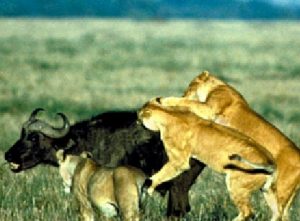
predator-prey Man seeks refuge in philosophy usually when things are not working for him/her in the world. When s/he is desperate and exhausts all the means at his/her command, he searches for succor elsewhere, anywhere. Mind becomes palpably uncertain, agitated, and anxious in those times. The misery and sorrow that spring from having to helplessly watch the unsatiated hunger of their children, the endless destitution, disease and penury of their own, the daily grind of laboring in hot Sun for a pittance of a wage, the constant stress from the hawkish creditors who compound their struggles, make the parents desperately want someone who could tell them the purpose of their life and provide at least a ray of hope. Continue reading

dhyAna and samAdhi

Meditation

dhyAna and samAdhi are quite fascinating, pretty alluring and romantically inspiring terms for an aspirant on the spiritual path. They are almost always spoken in a tone that creates an awe. They sound mysterious, other worldly and ethereal. Many stories are told in the Purana-s about highly revered Sages lost in deep meditation or samAdhi to the extent that they were unaware of their own body being buried in heaps of sand or eaten away by critters and crawlers. Hair-rising narratives too are often reeled out about the powers that dhyAna and samAdhi lead one to – clairvoyance, multiple accomplishments (aNimAdi siddhi-s), infinite longevity (ciranjIvatva), visitations to subtler worlds inaccessible to normal human beings and so on. There is hardly a spiritual Guru who does not harangue about the glories a seeker will be bestowed through practicing dhyAna and samAdhi. Some teachers would even make these as a pre-requisite before any true ‘knowledge’ is imparted. As a result, the words dhyAna and samAdhi acquired varying meaning. Teachers too historically used or interpreted them in different ways. We shall attempt to take a synoptic view particularly from a Non-dual perspective what these terms connote and their role and relevance for a seeker who has adopted the jnAna mArga (The Knowledge Path) in his/her pursuit of liberation.

The write up is structured as a Power Point Presentation downloadable as a pdf file at: http://www.advaita.org.uk/discourses/downloads/dhyAna_samAdhi.pdf. Continue reading

Fear from wild creatures – 3

fear 3-1Part – 1           Part – 2

The fear most commonly experienced is the thought that I will end with the death of my physical body. Such a thought equating the ending of the “I” with the ending of the gross body indicates clearly the persisting misidentification of “I” with the body. It is the separate self which feels that it will disappear with the disappearance of the body. The cure for it is the recognition of the fact that the true “I” that I am, as Advaita teaches, is neither born nor will die; “I” is eternal, ageless, and imperishable (Bhagavad-Gita II-20). One who has really understood the Advaitic message abides as the true “I.”  ‘To abide as the true I’ means to be knowingly as that immortal and changeless Awareness and not to mistake oneself to be the body and the mind which are transient and perishable. Therefore, disciplining the body through a drill of practices (as done in skill development like car-driving or carpentry) or control of the mind through repeat exercises (as required for computer coding or mathematics) can hardly be called abidance as the true “I.”  Conscientiously feeling the difference between the phrases ‘I am the body’ and ‘I am aware of the body’ and experientially realizing that difference will help to firm up the understanding.

Continue reading

Fear from wild creatures – 2

pic2 for AVPart -1

Fear can be caused by a perceived threat which could be either from within the body-mind or from a source external to the body. The source of fear itself and consequently the type of fear can be either real or imaginary. We shall, however, not consider the issues related to the nature of the source causing the fear in this essay. We shall treat fear as a ‘signaling mechanism.’ Viewed thus, ‘fear’ includes all its other manifestations and variations like  anger, hatred, disgust, anxiety, revenge etc. The signal itself appears as tightening of muscles, fastness of breath, heaviness in the heart area, slowness of digestive processes, dilation of pupils of the eye, contortion in the facial muscles, perspiration and so on. Depending on the intensity of the threat, the flux of thoughts may alter and even the sense of a ‘separate self’ may disappear.

A point to be remembered is that, though all such reactions are commonly attributed to the source, the perceived source itself is not the cause. It is in the way one’s body-mind are programmed to react. Suppose you sweat on mistakenly seeing a rope as a snake in semi-darkness. The unreal snake in the rope has actually nothing to do with the way your body has reacted. Continue reading

Fear from wild creatures – 1

scared “I understand the Advaita teaching that everything is One only without a second, but I am always afraid of dogs and monkeys which are common in my place. Moreover, I also have a fear of snakes etc. as I live in a forest area.

Everything is brahman and therefore, ‘fear’ is also brahman.  Though my mind is convinced by the logic of Advaita, why do I suffer from various fears?”

If there is a perception of fear, it automatically implies that there is a ‘me’ as the ‘subject,’ the finite perceiver and there is the ‘other,’ an object, separated from ‘me.’  (For this analysis, we define an ‘object’ as anything that is perceived. Hence ‘fear’ is also an object). This in turn implies that I ignored my ‘Dimensionlessness’ (anantatva) and assumed finiteness to myself.

It is true that on the full understanding of the Oneness of “Whatever-That-IS,” there is no scope for any sort of ‘fear.’ After all, if all is One, and there is no second, where and who is the other to be afraid of?

We have a recent real-life example for this in the 35th Pontiff of Sringeri, Shri Abhinava Vidyatheertha Swami. He found a big cobra snake coiled around his neck when he was meditating in a remote forest area. He told his Successor: Continue reading

Hiranyagarbha – a Boltzmann Brain?

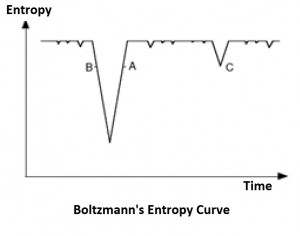
Boltzmann Brain The unequivocal and uncompromising declaration of Advaita is that ‘Nothing is ever born; there is no creation.’

If so, what is ‘all this’ that we see?

Well, if such a question arises, the scriptures invoke the IkShaNa shruti – to explain creation. It is just a conceptual model – a fact which the shruti itself affirms. A throb in brahman is said to have engendered a formless Hiranyagarbha, as the Creator, whose thought then projects a world. Sage Vasishta explains very clearly in the Chapter on Origination in Yogavasishta that “Hiranyagarbha is born within the Supreme Self. He has no form. His body comprises his mind only. There is no physical body for him. The five fundamental elements are born from Hiranyagarbha through his mentation (thought process). Hence the five elements and the subsequent products arising out of them like the gross worlds do not have reality. They lack Beingness. They are not really born. They are like the horns of a rabbit.”

While answering the question of “What is this universe?” the physicists too figured out from their calculations a similar mechanism. What they find is that there is a high probability of a vacuum fluctuation in an absolutely quiescent thermodynamic equilibrium giving rise to a single conscious brain (mind) within it rather than the entire gamut of universes, galaxies, livable planets, living creatures. us and so on.  Continue reading