Time Does Not Exist

Truth will set you free: Time Does Not Exist by Hans Meijer
Why time does not exist

When we ask ourselves why we think time exists, most of us would say: because we see everything changing, always. And so it is: everything in and around us is constantly changing, from beginning until the end.

The question however is: is the reason for this perpetual change to be found outside the changing subject (caused by a phenomena called time) or is all change coming from inside the changing subject itself?

I don’t think that it is hard to see that the latter is correct. That which makes things change (the cycle of life) to a flower, a human being or an animal is set by the characteristics of that particular life’s form and not by an outer cause such as time. What we call ‘time’ is just a method for measuring the ‘perpetual change’.

Because of our need to measure this perpetual change we decided to divide the ‘cyclic changes’ such as seasons and day and night, into months, twenty-four hours, minutes etc. These well-known changes are caused by the ever-moving planetary positions within our solar system and not because there exists such a thing as ‘time’.

So, there are no minutes, but we decided that after counting 60 (seconds) we say that a minute has passed. Based on minutes we calculate hours, days, months, years, centuries etc.

In this way we can count the number of heartbeats per minute, years from birth to death and we even can calculate the number of years from the Big Bang until today.

But we also say: ‘it seems as if time has stood still (in that old village), nothing has changed`.

Actually there is only NOW – in which all that is manifested appeared, changes and disappears. Continue reading
The Model of Insight

It occurred to me whilst reading Joseph Campbell’s Pathway to Bliss, that if we have no models of nameless now, then, well, we have no models.

Whatever conclusions we draw from this are our own doctrine(s) making themselves visible. For some the need to qualify and argue with such a proposition is tantamount (regardless of whether or not the author suggests their words be broadcast as superior wisdom or truer truths). For others there exists a desire to understand what it means for their own insight-now-moment.

660467Swami Krishnananda says there is, “a transference of human attributes to the Divine Existence [when] one contemplates the Cosmos as one’s Body. Just as, for example, the one contemplates one’s individual body, one simultaneously becomes conscious of the right eye, the left eye, [and so on] and all the limbs of the body at one and the same time, and one does not regard the different limbs of the body as distinguished from one another in any way, all limbs being only apparently different but really connected to a single personality, so in [the Vaisvanar Vidya] meditation, the consciousness is to be transferred to the Universal Being. Instead of one contemplating oneself as the individual body, one contemplates oneself as the Universal Body… The limbs of the Cosmic Person are identified with cosmic elements and vice versa, so that there is nothing in the cosmos which does not form an organic part of the Body of the Virat, or Vaisvanara…” (p6)

He goes on to say, “[that] whatever our mind can think, becomes an object for the mind; and that object, again, should become a part of the meditator’s Body, cosmically. And, the moment the object that is conceived by the mind is identified with the Cosmic Body, the object ceases to agitate the mind anymore; because that object is not any more outside…” (pp6-7)

Then, perhaps, even though we have no models of it (at least none we recognise as such), the notion of the mind itself can be identified with the Cosmic Body, with the Cosmic Existence; and rather than ‘objects of the mind’ becoming part of the ‘meditator’s body’ (in order to transfer consciousness to the Universal Being), contemplation itself can be identified with the Cosmic.

This would ostensibly cut out the middle man, so our every moment is a cosmic contemplation, simultaneously one as the so-called appearance of not-one. Whence it would be a function of the one for what we have labelled the appearance of not-one to fathom itself however it fathoms itself (rather than a path taken or not taken by an individual). And all that is apparently different but really inter-conected to a single field or oneness, would be known-felt-explained in those terms – oneness as an organic contemplation of oneself, cosmically.

References
The Māndūkya Upanishad (1996) by Swami Krishnananda

Pathway to Bliss: Mythological and personal transformation (2004) by Joseph Campbell

Serialization of Yogavasishta 4

yogavasishta3

Professor Sri Kuppa Venkata Krishna Murthy, Chairman and Managing Trustee of I-SERVE, the Institute of Scientific Research on Vedas, has kindly given permission for Advaita Vision to serialize his 6-volume ‘Musings on Yogavasishta’. Written in Telugu, the work has been painstakingly translated by our Dr. Ramesam Vemuri and published by Avadhoota Datta Peetham.

Rather than reproducing successive extracts from the books each month, as has been done with our other two serializations, the books themselves will be made available for download in PDF format. Each part will be associated with a page at the main website, which will contain a Contents List for that volume. Links to all of the volumes will be provided on a general Contents Page.

The fourth part to be published is Part 3 (ORIGINATION). (We began with Part 7 of the Series as it provides an overall summary of the Non-dual teaching and is a better introduction than simply jumping in at Part 1.) As Ramesam puts it: “The main thrust of the teaching by Sage Vasishta is that the visible world has no real origination. He establishes that the space-time-causation of the phenomenal world is illusory and arises out of pure mentation.” A timely coincidence with Charles’ series on Kant, where he notes that “Kant’s position, therefore, translated to Advaita terms, is that space and time are only valid in the context of transactional (vyAvahArika) reality, and therefore not truly Real (pAramArthika).”

Please go to the Contents Page to read the Announcement and general introduction from Ramesam. The page for this Third Volume, Part 3 (ORIGINATION) also contains the download link for the PDF file (0.9MB).

Q. 382 – Art and Vedanta

Q: As an artist and casual reader of advaita-vedanta, I wanted to ask about advaita-vedanta’s opinion on Art (be it music, painting, dance etc.).

Generally speaking, we can classify art into broadly 2 categories – sentimental art and non-sentimental art. But, as a practitioner of the former and a student of the latter (I had strict classical music training), I almost think of myself as being ‘attracted’ to art – as in, there is this sense of desire to create music. Personally, I have been advised by several elders to continue producing and practicing music. But does this go against the advice of advaita-vedanta? Am I acting on desires? Will art get artists permanently stuck in the cycle of samsara?

I ask this question because – There are so many Slokas, mantras, verses (sam-veda) that are musical… so it seems like music is encouraged by the vedas and the upanishads. But at the same time, it seems like a thing of desire. This confusion needs to be cleared!

Responses from Martin, Charles, Ted and Dennis Continue reading

Vedanta the Solution – Part 27

venugopal_vedanta

VEDĀNTA the solution to our fundamental problem by D. Venugopal

Part 27 begins the enquiry into the nature of the jIva. It looks at the various explanations for how Consciousness manifests in the body-mind and the special role of the buddhi.

There is a complete Contents List, to which links are added as each new part appears.

The Relevance of Kant’s Transcendental Idealism to Advaita Vedanta, Part II

266px-Immanuel_Kant_(portrait)In Part I of this three-part series, I introduced Kant’s work and summarized his views on a priori and a posteriori knowledge. In this second part, we’ll review analytic versus synthetic judgments, clarify the meaning of transcendental idealism as it applies to Kant’s work in general, and also analyze tat tvam asi in terms of Kant’s philosophy.

Analytic and Synthetic Judgments

Kant’s investigation of the faculties of reason led him to explore the nature of judgments. He made clear the crucial difference between analytic and synthetic judgments. Kant’s jargon can become admittedly arcane, but analytic and synthetic are not hard to understand. Continue reading

Tattvabodha – Part 12

OLYMPUS DIGITAL CAMERA

Part 12 of the commentary by Dr. VIshnu Bapat on Shankara’s Tattvabodha.This is a key work which introduces all of the key concepts of Advaita in a systematic manner.

The commentary is based upon those by several other authors, together with the audio lectures of Swami Paramarthananda. It includes word-by-word breakdown of the Sanskrit shloka-s so should be of interest to everyone, from complete beginners to advanced students.

Part 12 examines the waking and dream states of experience.

There is a hyperlinked Contents List, which is updated as each new part is published.

Overview of Western Philosophy – Part 1

TTopazwo-33832his is the first part of an 18-part overview of Western Philosophy. Originally written to be incorporated into ‘Book of One’, it became far too long and detailed. I posted the first 15 parts to Advaita Academy around 5 years ago but these are no longer available. Since we have a current interest in the subject with both Charles and Martin posting articles and comments, it seems like an opportune time to begin to repost the series!
Note that the depth to which the subject is addressed is fairly shallow for the most part. I am not a philosopher by education or employment and most of my understanding has been gleaned from secondary sources – I have read very few original philosophical texts! But I hope it provides a general introduction to the key ideas of most well-known Western philosophers so that the reader may go to the original source (or a good commentary) if interested. Needless to say, I tend to ‘cherry-pick’ those aspects that related to Advaita!

What Western Philosophers Have Said

A site such as this would be unthinkable without reference to what has been thought and written by Western philosophers. Philosophers used not to limit their investigation to those areas that we now think of as philosophy. Aristotle for example wrote books on physics, biology, mathematics, psychology, politics and meteorology, to mention just a few. Their interests ranged across the entire spectrum of human endeavour. It should not be too surprising, then, to find that many philosophers do not seem specifically to have addressed those questions that concern Advaita – there were simply too many other diverting subjects to investigate. Nevertheless, since the question of what we ought to do with our lives in order to achieve fulfilment and happiness is rather more important than most, it is perhaps surprising that it seems so difficult to discover clear guidance from this intellectual elite. Continue reading

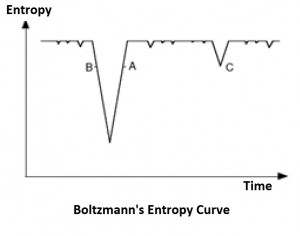
Hiranyagarbha – a Boltzmann Brain?

Boltzmann Brain The unequivocal and uncompromising declaration of Advaita is that ‘Nothing is ever born; there is no creation.’

If so, what is ‘all this’ that we see?

Well, if such a question arises, the scriptures invoke the IkShaNa shruti – to explain creation. It is just a conceptual model – a fact which the shruti itself affirms. A throb in brahman is said to have engendered a formless Hiranyagarbha, as the Creator, whose thought then projects a world. Sage Vasishta explains very clearly in the Chapter on Origination in Yogavasishta that “Hiranyagarbha is born within the Supreme Self. He has no form. His body comprises his mind only. There is no physical body for him. The five fundamental elements are born from Hiranyagarbha through his mentation (thought process). Hence the five elements and the subsequent products arising out of them like the gross worlds do not have reality. They lack Beingness. They are not really born. They are like the horns of a rabbit.”

While answering the question of “What is this universe?” the physicists too figured out from their calculations a similar mechanism. What they find is that there is a high probability of a vacuum fluctuation in an absolutely quiescent thermodynamic equilibrium giving rise to a single conscious brain (mind) within it rather than the entire gamut of universes, galaxies, livable planets, living creatures. us and so on.  Continue reading

The Mystery – Part 2

bimal_cover

Continuing this new, short series presenting the booklet by Bimal Prasad, in which he answers some ‘Rarely Asked Questions’ on Life. Primarily from the perspective of Advaita, questions addressed include the nature of happiness, consciousness, mind and ego. There is also practical guidance on meditation in the final chapter. Answers are relevant and succinct, so that many of the issues of interest to the seeker are covered.

This second part looks at the distinction between ‘I’ and the body-mind and identifes ‘Consciousness’ as being who we really are. See the Contents List or go straight to Part 2 of the series.

The complete (electronic form) booklet may also be purchased from Amazon.